Dessert Vanilla Sponge Cake
Highlighted under: Classic Cakes
I love baking this Dessert Vanilla Sponge Cake because it never fails to impress my friends and family. The light and airy texture, combined with the rich essence of vanilla, creates a delightful treat that pairs beautifully with fresh fruits or whipped cream. Over the years, I've adjusted the recipe to make it even fluffier and more flavorful. The secret lies in properly whisking the eggs and incorporating air, which results in that perfect rise. It's an absolute go-to for celebrations or just a sweet indulgence on a regular day.
Baking this Dessert Vanilla Sponge Cake has become a cherished ritual for me. I remember the first time I tried making it; the anticipation of watching the batter rise and turn golden brown kept me on my toes. The aroma that wafts through the kitchen is simply irresistible and brings back fond memories of family gatherings.
What sets this sponge cake apart is achieving the right balance of ingredients and technique. By using room-temperature eggs and folding in the flour gently, I’ve learned to maintain its airy structure. It’s a skill worth mastering, as the result is a cake that is tender and delicious—perfect for any occasion!
Why You'll Love This Cake
- Light, fluffy texture that melts in your mouth
- Rich and aromatic vanilla flavor that elevates any occasion
- Versatile base for various toppings and fillings
Perfecting Your Sponge Cake Technique
Achieving a light and airy vanilla sponge cake hinges greatly on how you whisk the eggs and sugar. I recommend using a stand mixer if you have one; it makes the process easier and ensures consistent results. Whisking for about 5 minutes until the mixture becomes thick, pale, and has doubled in volume is crucial for incorporating enough air. The mixture should create a ribbon when drizzled back over itself, indicating it's ready for the next steps.
When folding in the dry ingredients, opt for a spatula instead of a whisk to avoid deflating the airy mixture. Use a gentle motion, sliding the spatula down the sides of the bowl and lifting up from the bottom. This technique preserves the volume you've painstakingly created. If you notice streaks of flour remaining, you can fold a little more, but stop once no dry ingredients are visible to maintain that desirable fluffiness.
Choosing and Preparing Ingredients
Selecting high-quality ingredients significantly impacts the flavor and texture of your cake. For the best results, use fresh eggs as they contribute to the cake’s rise and overall stability. Room temperature ingredients are essential; if your butter is too cold, it won't mix evenly with the batter, leading to a dense cake. Let your eggs and butter sit out for about 30 minutes before starting to ensure they incorporate smoothly.
For those looking to make substitutions, consider using gluten-free all-purpose flour for a gluten-free version. The key is to select a blend designed for baking to maintain the proper texture. Additionally, if you have dietary restrictions regarding dairy, you can substitute the unsalted butter with a dairy-free margarine or even coconut oil—both options can yield a moist cake while still enhancing the flavor.
Storing and Serving Your Cake
Once your cake has cooled completely, you can either enjoy it immediately or store it for later. To keep the sponge cake fresh, wrap it tightly in plastic wrap or aluminum foil. It can be stored at room temperature for up to 2 days or in the refrigerator for up to a week. If you want to make it in advance, consider freezing the un-iced cake. Just ensure it’s wrapped well, and it can last in the freezer for up to three months. When ready to serve, thaw it overnight in the fridge before decorating.
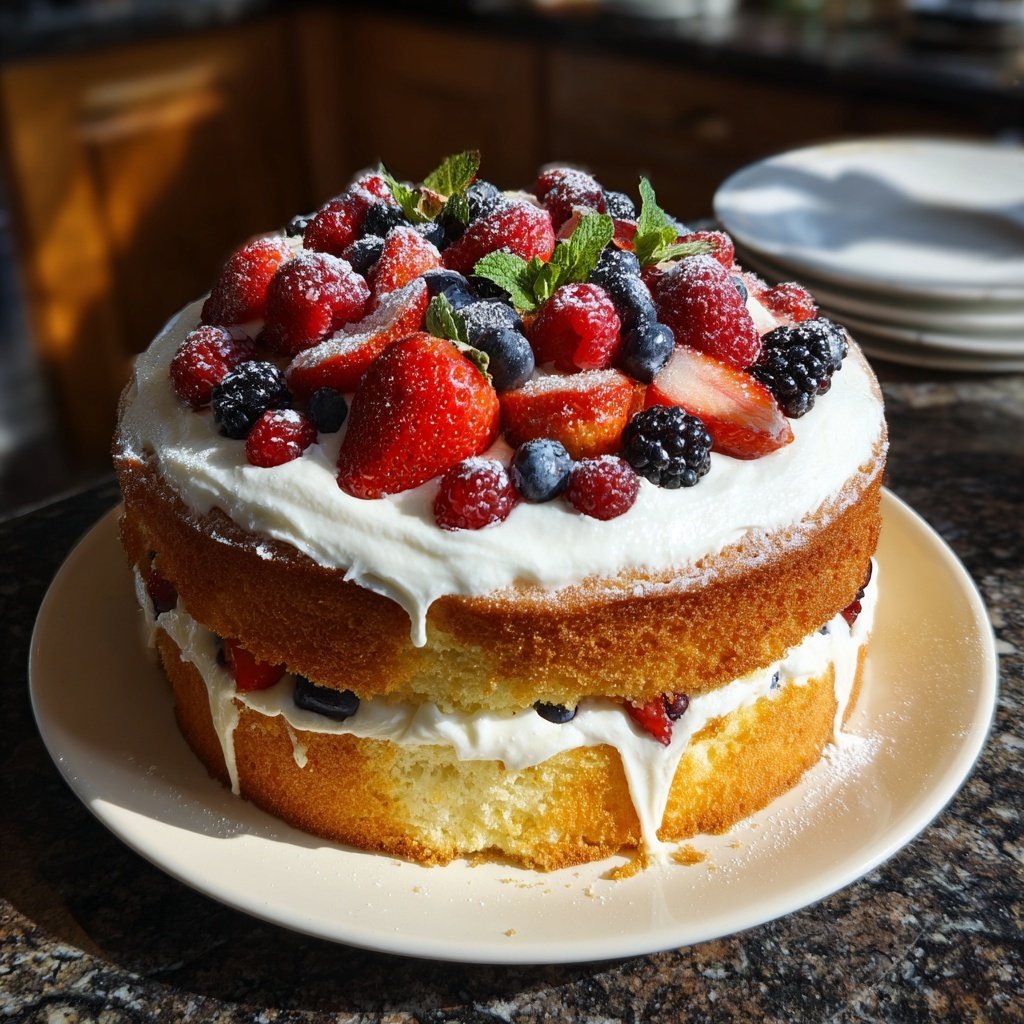
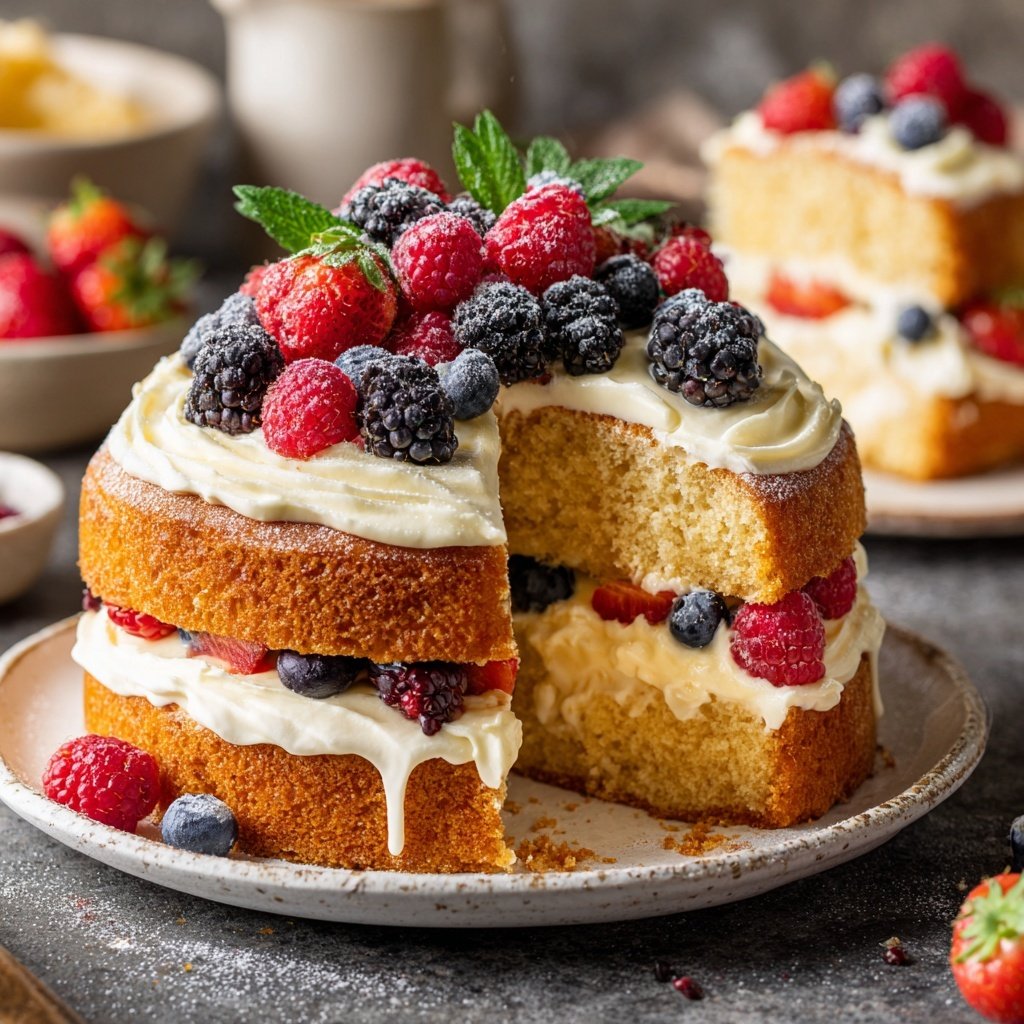
To elevate your vanilla sponge cake, consider various topping options. A simple dusting of powdered sugar, fresh fruits like strawberries or raspberries, or a dollop of whipped cream all enhance the cake's presentation and flavor. For a richer experience, try layering it with a creamy vanilla or chocolate ganache. If you have extra time, incorporate a fruit compote between layers to add moisture and a delightful contrast.
Ingredients
Gather all your ingredients for this delightful cake:
For the Vanilla Sponge Cake
- 4 large eggs
- 1 cup granulated sugar
- 1 cup all-purpose flour
- 1/2 cup unsalted butter, melted
- 1 tablespoon vanilla extract
- 1 teaspoon baking powder
- 1/4 teaspoon salt
Make sure to measure your ingredients accurately for the best results.
Instructions
Follow these simple steps to create your cake:
Prepare Ingredients
Preheat your oven to 350°F (175°C) and grease a 9-inch round cake pan.
Whisk Eggs and Sugar
In a large bowl, whisk together the eggs and sugar until light and fluffy, about 5 minutes.
Combine Dry Ingredients
In another bowl, sift together the flour, baking powder, and salt.
Fold Ingredients
Gently fold the dry ingredients into the egg mixture, taking care not to deflate it.
Add Butter and Vanilla
Pour in the melted butter and vanilla extract, mixing just until incorporated.
Bake
Pour the batter into the prepared pan and bake for 30 minutes, or until a toothpick comes out clean.
Cool and Serve
Allow the cake to cool in the pan for 10 minutes before transferring it to a wire rack to cool completely.
Feel free to frost or serve with toppings of your choice!
Pro Tips
- For an extra flavor boost, consider adding a teaspoon of almond extract to the batter.
Troubleshooting Common Issues
If your sponge cake doesn’t rise as expected, there are a few potential culprits. One common issue could be under-whisking the eggs; ensure that they are beaten to a thick, fluffy consistency. If the baking powder is old, it may not provide the needed lift, so check its expiration date regularly. Overmixing the batter after adding the dry ingredients can also lead to a dense texture, so be gentle during this step.
Sometimes, cakes may crack on the surface while baking. This could be due to an oven that’s too hot. A good tip is to use an oven thermometer to verify the actual temperature inside. If you notice cracks, don't worry—once the cake cools, you can level the top with a knife for a smooth finish. Alternatively, frosting can also hide this imperfection beautifully.
Scaling the Recipe
If you're needing a larger cake for celebrations, scaling this recipe is straightforward. Doubling the ingredients will fill a 12-inch pan perfectly, but be sure to adjust baking times accordingly. A larger cake might require an extra 10-15 minutes in the oven; use the toothpick method to check for doneness. Likewise, for a smaller gathering, halving the recipe can easily fit a 6-inch pan, leaving you with a lovely mini cake.
When scaling down, be mindful of how your mixing method might change. Smaller quantities can whip up quicker, so keep an eye on your mixture to prevent over-whisking. For both smaller and larger batches, it's essential to maintain ratios for the best results; consistency is key for achieving that ideal fluffy texture regardless of the portion size.
Questions About Recipes
→ Can I use cake flour instead of all-purpose flour?
Yes, you can use cake flour for an even lighter texture!
→ How can I store the sponge cake?
Store it in an airtight container at room temperature for up to 3 days.
→ Can I freeze the sponge cake?
Absolutely! Wrap it tightly in plastic wrap and freeze for up to 2 months.
→ What can I serve with the cake?
It pairs wonderfully with fresh fruits, whipped cream, or even a light glaze.
Dessert Vanilla Sponge Cake
Created by: The Chefsimonsfood Team
Recipe Type: Classic Cakes
Skill Level: Intermediate
Final Quantity: 8 servings
What You'll Need
For the Vanilla Sponge Cake
- 4 large eggs
- 1 cup granulated sugar
- 1 cup all-purpose flour
- 1/2 cup unsalted butter, melted
- 1 tablespoon vanilla extract
- 1 teaspoon baking powder
- 1/4 teaspoon salt
How-To Steps
Preheat your oven to 350°F (175°C) and grease a 9-inch round cake pan.
In a large bowl, whisk together the eggs and sugar until light and fluffy, about 5 minutes.
In another bowl, sift together the flour, baking powder, and salt.
Gently fold the dry ingredients into the egg mixture, taking care not to deflate it.
Pour in the melted butter and vanilla extract, mixing just until incorporated.
Pour the batter into the prepared pan and bake for 30 minutes, or until a toothpick comes out clean.
Allow the cake to cool in the pan for 10 minutes before transferring it to a wire rack to cool completely.
Extra Tips
- For an extra flavor boost, consider adding a teaspoon of almond extract to the batter.
Nutritional Breakdown (Per Serving)
- Calories: 250 kcal
- Total Fat: 12g
- Saturated Fat: 7g
- Cholesterol: 160mg
- Sodium: 150mg
- Total Carbohydrates: 30g
- Dietary Fiber: 1g
- Sugars: 20g
- Protein: 4g