Global Japanese Sushi Rolls
Highlighted under: Adventure Food
When I first tried making sushi at home, I was intimidated, but now it's become one of my favorite culinary adventures. I love the endless possibilities of flavor combinations and the satisfaction of rolling my own sushi. With this recipe, I aim to share the joy of creating sushi rolls, whether you're a seasoned pro or a beginner looking to impress your friends. Trust me, once you get the hang of it, you'll want to keep experimenting with different fillings and toppings.
I've always been fascinated by the art of sushi-making, so diving into crafting my own rolls was a natural progression for me. The balance of flavors and textures in Japanese cuisine truly inspires creativity in the kitchen. My first attempt was a bit messy, but it tasted great! The trick I learned is to always keep your hands damp while working with sushi rice to prevent sticking.
Experimenting with various fillings like avocado, crab, and even mango has unlocked an entirely new world of flavors for me. Plus, using high-quality ingredients made a noticeable difference in the final product. Each roll is a reflection of personal taste, and that's what makes this dish so enjoyable!
Why You'll Love These Rolls
- The versatility allows you to customize flavors to your liking.
- Fresh ingredients ensure a vibrant taste with each bite.
- Making sushi at home is a fun and interactive experience.
Understanding Sushi Rice
The foundation of any great sushi roll lies in perfectly cooked sushi rice. Sushi rice, or shari, has a unique stickiness that allows it to hold together when rolling. Rinsing the rice until the water runs clear is crucial to remove excess starch, which helps achieve that ideal texture. After cooking, let the rice rest for about 10 minutes; this step helps to further improve its cohesion as the grains relax and absorb any remaining moisture.
Additionally, the seasoning mixture of rice vinegar, sugar, and salt not only enhances flavor but also contributes to the rice's glossy appearance. The heating process should be gentle, ensuring the sugar and salt dissolve fully without boiling. Pour the mixture over the rice while it's still warm to allow for better absorption, and remember to use a wooden spatula to prevent crushing the grains.
Rolling Techniques
Rolling sushi can feel tricky at first, but a few key techniques can make the process smoother. When you're ready to roll, use a bamboo mat as your base; this allows for even pressure. Make sure to wet your hands before handling the rice to prevent sticking, and use a gentle touch. Ensure the ingredients aren’t overstuffed; keep the fillings centered and use a light hand when rolling to prevent tearing the nori.
As you roll, start from the bottom edge and lift the mat, pulling it towards you while applying light pressure. If the edge of the nori doesn’t seal, touch it with a bit of water and press down. Practice makes perfect! Your first roll may not be perfect, but with repetition, you’ll find the rhythm and confidence to create beautifully rolled sushi every time.
Flavor Variations and Pairing
One of the joys of making sushi rolls is experimenting with flavors. Consider swapping the crab meat with slices of mango for a tropical flair or using smoked salmon for a savory contrast. Vegetarians can enjoy tofu or pickled vegetables, offering unique textures and profiles. Don’t hesitate to mix up the sauces; a drizzle of spicy mayonnaise or a tangy ponzu can elevate each bite.
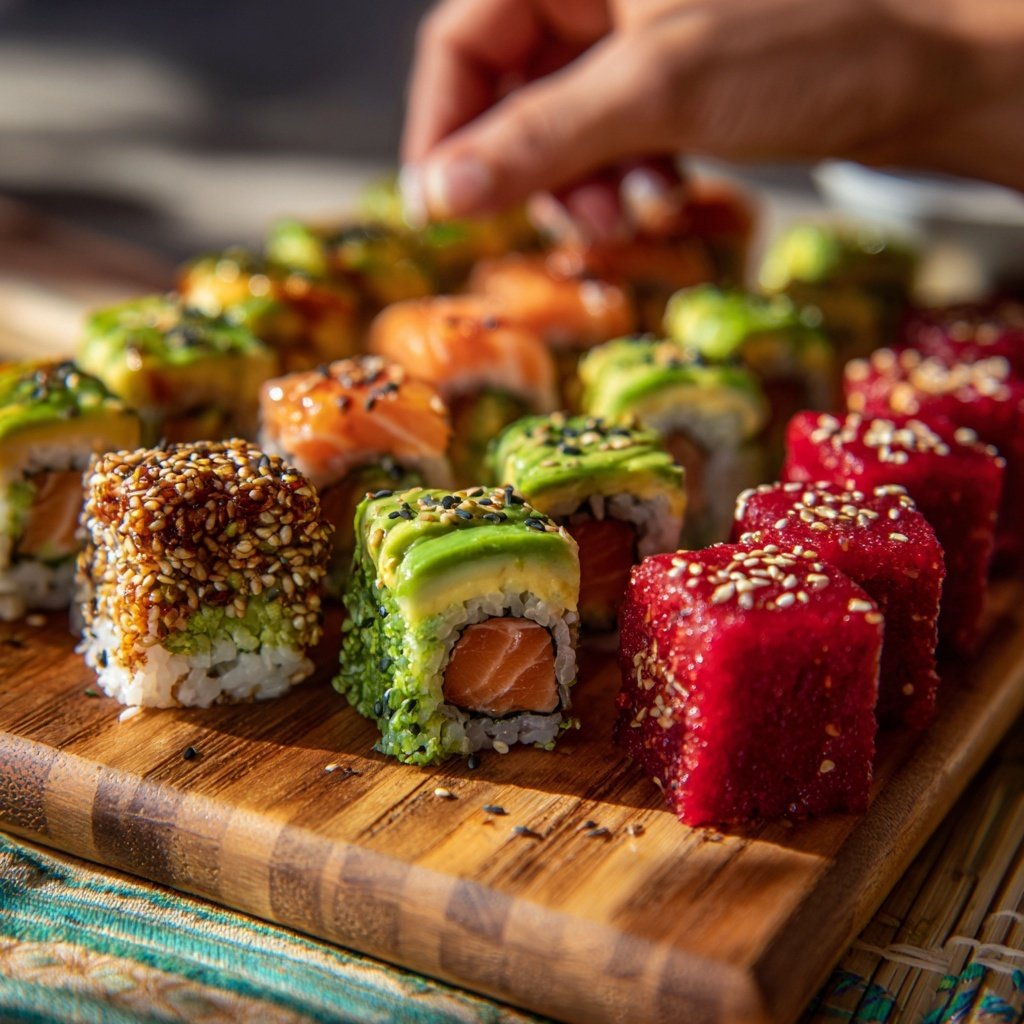
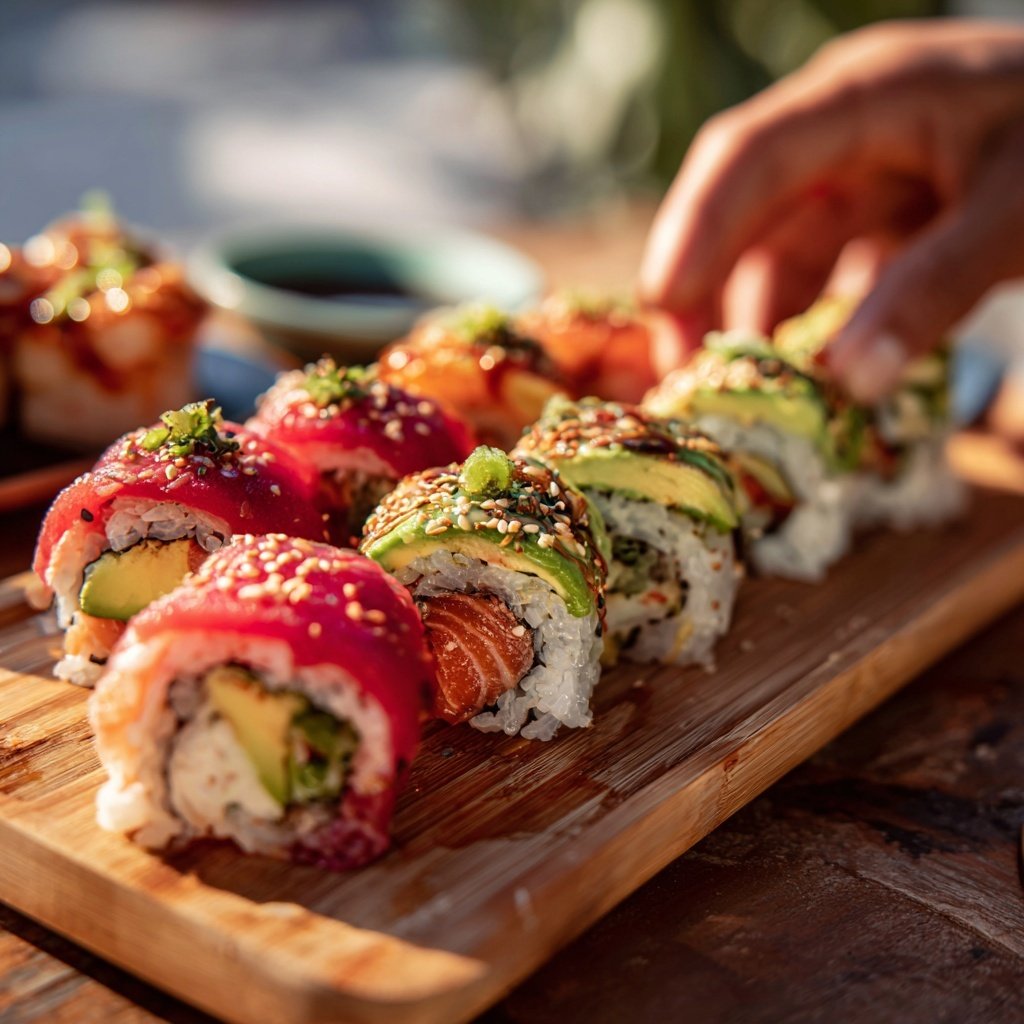
When serving your sushi, presentation is key. Arrange your rolls on a platter and sprinkle with sesame seeds not only for flavor but also for a visual pop. Pair your sushi with traditional sides like pickled ginger and wasabi, which cleanse the palate between bites. For a complete experience, consider a light sake or green tea to enjoy alongside your culinary creation.
Ingredients
Gather these ingredients to make your sushi rolls:
For the Sushi Rolls
- 2 cups sushi rice
- 2 1/4 cups water
- 1/4 cup rice vinegar
- 2 tablespoons sugar
- 1 teaspoon salt
- Nori seaweed sheets
- 1 avocado, sliced
- 1 cucumber, julienned
- 4 oz crab meat or cooked shrimp
- Sesame seeds for garnish
- Soy sauce for dipping
Have all your ingredients ready before starting to roll!
Instructions
Follow these steps to create your perfect sushi rolls:
Cook the Sushi Rice
Rinse the sushi rice under cold water until the water runs clear. Combine the rinsed rice and water in a pot and bring to a boil. Reduce the heat to low, cover, and simmer for 20 minutes. Remove from heat and let it sit for 10 minutes.
Season the Rice
In a small saucepan, combine rice vinegar, sugar, and salt over low heat until dissolved. Pour the mixture over the cooked rice, gently folding it in. Allow the rice to cool to room temperature.
Prepare the Rolls
Lay a sheet of nori on a bamboo mat, shiny side down. Wet your hands and spread a thin layer of sushi rice over the nori, leaving a small margin at the top. Place avocado, cucumber, and crab meat along the bottom edge of the rice.
Roll the Sushi
Starting from the bottom, gently roll the sushi while applying light pressure. Keep rolling until you reach the margin. Use a little water to seal the edge of the nori.
Slice and Serve
Using a sharp knife, slice the roll into bite-sized pieces, wiping the knife with a damp cloth between cuts. Serve with soy sauce and a sprinkle of sesame seeds.
Enjoy your homemade sushi rolls!
Pro Tips
- Use high-quality sushi-grade fish if including raw ingredients. Practice makes perfect, so don't be discouraged if your first rolls aren't perfect!
Ingredient Substitutions
If you're looking to customize your sushi rolls, several ingredient substitutions can cater to your dietary needs or preferences. For those who cannot eat crab, imitation crab or even grilled chicken can provide a satisfying replacement. For a plant-based option, use marinated tofu or roasted vegetables that add both flavor and texture, ensuring that your sushi experience remains delicious without compromising your dietary restrictions.
Moreover, if Nori sheets are hard to find, you can experiment with rice paper wraps. This change will give your rolls a different taste and texture, ideal for those new to sushi. Just ensure to soak the rice paper briefly to soften it before using, making it pliable enough to roll without cracking.
Storage and Make-Ahead Tips
Sushi rolls are best enjoyed fresh, but if you have leftovers, proper storage is essential. Wrap any remaining sushi tightly in plastic wrap to prevent them from drying out, and store them in the refrigerator for no more than 24 hours. The rice may harden slightly, but a quick reassembly with freshly made dipping sauce can revive the flavors.
If you're planning to host a gathering, consider preparing your sushi rice and filling ingredients in advance. Cook the sushi rice the day before and refrigerate it; this makes your sushi-making process seamless and fun. Just remember to let the refrigerated rice come to room temperature before rolling, ensuring optimal texture.
Questions About Recipes
→ Can I make sushi without raw fish?
Absolutely! You can use cooked shrimp, crab, or even vegetables.
→ What is the best rice for sushi?
Short-grain sushi rice is preferred for its sticky texture.
→ How do I store leftover sushi?
Wrap tightly in plastic wrap and refrigerate for up to 24 hours.
→ Can I make sushi ahead of time?
For best taste, it's recommended to enjoy sushi fresh, but you can pre-prepare the ingredients.
Global Japanese Sushi Rolls
Created by: The Chefsimonsfood Team
Recipe Type: Adventure Food
Skill Level: Intermediate
Final Quantity: 4 rolls
What You'll Need
For the Sushi Rolls
- 2 cups sushi rice
- 2 1/4 cups water
- 1/4 cup rice vinegar
- 2 tablespoons sugar
- 1 teaspoon salt
- Nori seaweed sheets
- 1 avocado, sliced
- 1 cucumber, julienned
- 4 oz crab meat or cooked shrimp
- Sesame seeds for garnish
- Soy sauce for dipping
How-To Steps
Rinse the sushi rice under cold water until the water runs clear. Combine the rinsed rice and water in a pot and bring to a boil. Reduce the heat to low, cover, and simmer for 20 minutes. Remove from heat and let it sit for 10 minutes.
In a small saucepan, combine rice vinegar, sugar, and salt over low heat until dissolved. Pour the mixture over the cooked rice, gently folding it in. Allow the rice to cool to room temperature.
Lay a sheet of nori on a bamboo mat, shiny side down. Wet your hands and spread a thin layer of sushi rice over the nori, leaving a small margin at the top. Place avocado, cucumber, and crab meat along the bottom edge of the rice.
Starting from the bottom, gently roll the sushi while applying light pressure. Keep rolling until you reach the margin. Use a little water to seal the edge of the nori.
Using a sharp knife, slice the roll into bite-sized pieces, wiping the knife with a damp cloth between cuts. Serve with soy sauce and a sprinkle of sesame seeds.
Extra Tips
- Use high-quality sushi-grade fish if including raw ingredients. Practice makes perfect, so don't be discouraged if your first rolls aren't perfect!
Nutritional Breakdown (Per Serving)
- Calories: 275 kcal
- Total Fat: 8g
- Saturated Fat: 1g
- Cholesterol: 30mg
- Sodium: 150mg
- Total Carbohydrates: 45g
- Dietary Fiber: 4g
- Sugars: 1g
- Protein: 7g